Blog·
What a smelter's physical signature looks like in satellite imagery
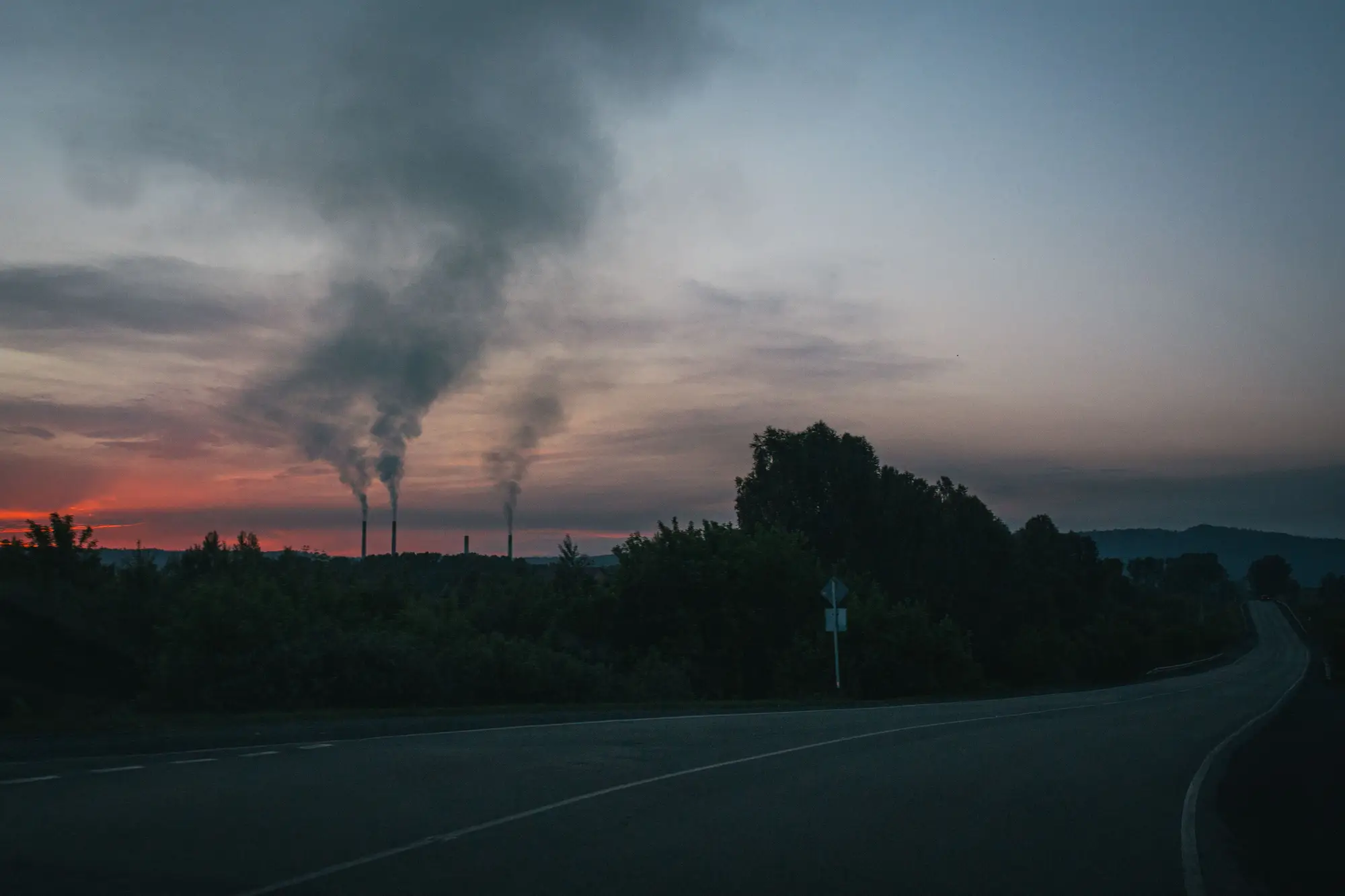
If you've ever tried to confirm a smelter exists at a given coordinate using nothing but imagery, you already know the problem isn't finding a big industrial building. Producing regions are full of big industrial buildings. The problem is telling a smelter apart from a foundry, a cement kiln, or a scrap yard that just happens to have a tall stack.
A smelter has a physical signature made up of several things stacked together, not one giveaway feature. Here's what a compliance team or imagery analyst looks for in practice.
The stack arrangement and roof geometry
Smelters tend to cluster stacks rather than run a single chimney. Primary smelting (the furnace that reduces ore or concentrate) and secondary processes like sintering or refining each vent separately, so you'll often see two, three, or more stacks of different heights grouped close together, sometimes with a taller flue stack set apart from the shorter process vents. Steel mills and foundries can look similar from a distance, which is exactly why stack count and spacing alone won't settle it. You need the roofline too: smelters usually pair a long, low furnace building (bay-style roof, sometimes with visible roof monitors for heat venting) against a separate, more compact building for casting or refining.
Slag, stockpiles, and the stuff lying around outside
This is where smelters tend to give themselves away more clearly than the buildings do. Slag heaps show up as dark, often reddish or black mounded material near the furnace building, usually on a dedicated pad with truck access, distinct from ore or scrap stockpiles elsewhere on site. Concentrate or ore stockpiles sit near a rail spur or barge dock if the site is large enough to need bulk delivery. Cooling ponds or water basins near the furnace building are common too, since smelting generates a lot of waste heat that has to go somewhere. None of these alone proves smelting is happening, but the combination, furnace building plus slag pad plus bulk material handling, narrows things down fast.
Smelter heat and stack signature
This is the piece that gets asked about most, so it's worth being precise about what multispectral imagery can and can't show. Thermal bands can pick up heat differential between an active furnace building and the surrounding ground or roof, and a smelter running continuously will usually show a persistent thermal anomaly where other facility types won't. Stack plumes, when visible, can also distinguish an actively venting site from a shuttered one. A single satellite pass only shows what the furnace was doing at the moment of capture: a furnace cycling down for maintenance that day will read cold, which is one of the reasons a one-time image pull isn't enough to confirm or rule out a site.
Rail spurs, truck access, and site layout
A working smelter needs to move a lot of material in and a lot of product (or slag) out, so site layout tells you almost as much as the buildings do. Look for a dedicated rail spur terminating at a stockpile or loading bay, a truck apron wide enough for heavy haul trucks rather than standard delivery vehicles, and internal roads connecting the furnace building to the slag pad and the stockpile separately. A warehouse with none of that supporting infrastructure is probably not smelting anything, regardless of what the roofline looks like.
Why this matters for tier-2 and tier-3 mapping
None of these signals is conclusive by itself. A compliance manager working a producing region with no declared supplier list isn't trying to prove a site is a smelter from a single clue. The work is combining stack geometry, slag and stockpile patterns, thermal behavior, and transport infrastructure into a shortlist of candidate sites worth running down with ground verification or supplier outreach. That's the actual deliverable behind the idea of searching a region for the physical signature of undeclared tier-2 and tier-3 sites rather than waiting for a tier-1 supplier to name them.
If your current supplier list stops at tier 1 and you need to know what's actually feeding it, that candidate-site approach is worth a look.